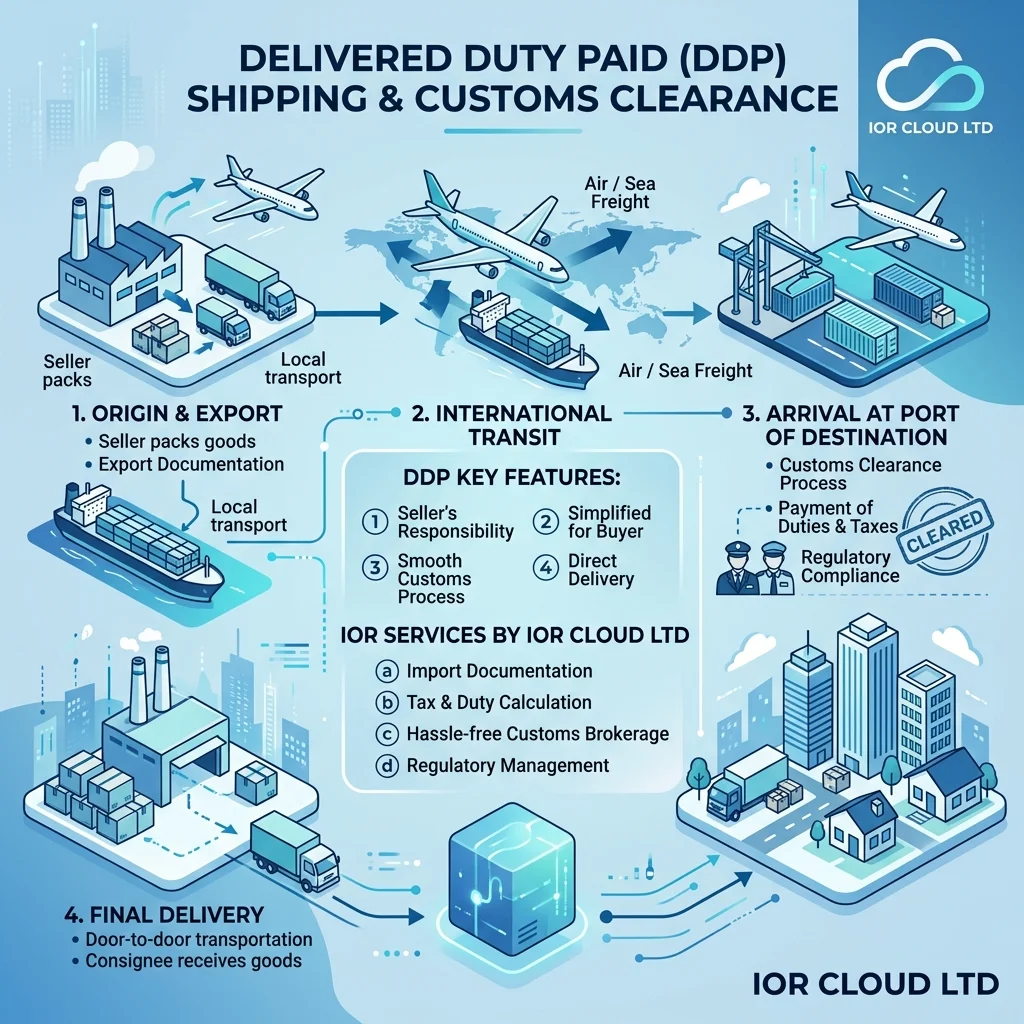

Of the eleven Incoterms defined by the International Chamber of Commerce, none shifts more risk away from the buyer than Delivered Duty Paid (DDP). Under DDP, the seller (or their logistics partner) is responsible for the goods all the way to the buyer's door — including export clearance, international freight, import duties, taxes, and final-mile delivery. The buyer's only job is to receive the shipment.
Why DDP Is the Default for Enterprise IT
For a single pallet of consumer goods, the cost difference between DDP and a buyer-managed Incoterm like DAP or EXW might not matter much. But for a shipment of racks, servers, or networking hardware worth hundreds of thousands of dollars, an unexpected duty reassessment or a missed telecom certification can blow a project budget or delay a go-live date by weeks.
DDP converts that variable, hard-to-forecast risk into a single, known landed cost quoted before the shipment ever leaves the warehouse. For finance and procurement teams, that predictability is often more valuable than the marginal cost savings of managing customs in-house.
What DDP Does Not Remove
DDP shifts financial and administrative responsibility, but it doesn't eliminate the underlying regulatory complexity — it just moves who has to solve it. A DDP provider without deep local expertise in, say, Brazil's ICMS tax stack or Nigeria's SONCAP certification process can still misprice a shipment and absorb losses, or worse, cause the exact customs delays DDP was meant to prevent.
This is why the strength of a DDP quote is only as good as the local compliance network behind it. IOR Cloud Ltd. calculates landed cost using live duty, VAT, and certification data across our entire covered market list, so the number in your quote is the number you actually pay.
When DAP Makes More Sense
DDP isn't always the right fit — some clients with an established local tax presence prefer Delivered At Place (DAP), where they handle import duties themselves to reclaim local VAT directly. We cover this trade-off in more detail in our DDP vs. DAP guide in the Learn section.