
The world of global trade does not move in a straight line. It responds to technology, policy, and infrastructure shifts that sometimes arrive faster than businesses can adapt. Right now, one of the most significant forces reshaping how goods move across borders is 5G. Not as a buzzword, but as a real operational catalyst that is changing how logistics networks function, how customs documentation is managed, and how companies make real-time decisions about shipments worth millions of dollars.
Governments and multinational conglomerates are investing heavily in 5G infrastructure, and the logistics sector is directly in the crosshairs of that transformation. According to IHS Markit and the World Economic Forum, 5G is projected to reach a global economic value of USD 13.2 trillion by 2035. The scale of that impact means trade professionals cannot afford to sit on the sidelines.
What Makes 5G Different for Trade and Logistics
Previous generations of wireless technology helped logistics companies move faster. 5G does something more fundamental. It enables systems to operate at a level of precision and speed that earlier networks simply could not support. With ultra-low latency, massive device connectivity, and data speeds far beyond what 4G could deliver, 5G global trade infrastructure is creating a new operational baseline for companies managing complex international supply chains.
GSMA data shows that 5G now covers half of global markets and nearly one-third of the world's population. That coverage is not evenly distributed, but its expansion is consistent. As networks grow, so does the opportunity for trade businesses to integrate smarter technologies into their logistics operations.
How 5G Is Changing the Way Goods Move Across Borders
The mechanics of international trade involve layers of coordination: freight carriers, customs authorities, warehouses, compliance teams, financial institutions, and technology platforms. 5G does not replace any of these layers. Instead, it connects them with a speed and reliability that previous technology could not offer.
Real-Time Shipment Visibility
One of the most immediate impacts of the 5G logistics rollout is the improvement in shipment visibility. Sensors embedded in containers, pallets, and cargo units can now transmit data in real time without the latency gaps that made 4G-based tracking unreliable. Logistics managers can monitor temperature, humidity, location, and security status of goods at every point in their journey, allowing faster responses to disruptions before they become costly problems. Maersk notes that 5G can reduce the risk and impact of delays and disruptions across all supply chain stages.
Smarter Customs Processing
Customs agencies in multiple countries are exploring digital transformation strategies to reduce clearance times. OECD Trade Facilitation Indicators data shows that economies implementing full electronic documentation and automated risk management reduced average border-release times by 30% to 60% between 2020 and 2024. 5G connectivity supports the kind of real-time data exchange needed to link electronic documentation systems, cargo scanning technology, and compliance databases.
Connected Warehousing and Port Operations
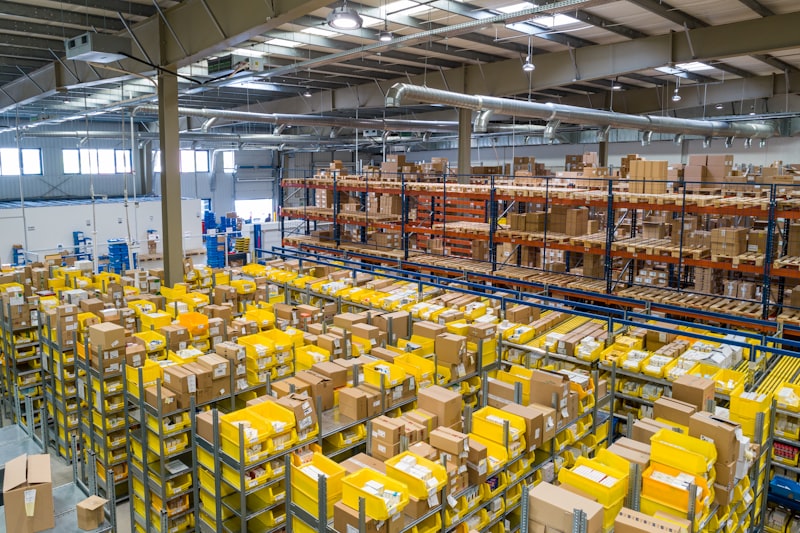
Warehouses and port facilities are among the most critical nodes in any global supply chain. 5G enables these facilities to operate with a level of automation and coordination that was previously restricted to theory. Autonomous guided vehicles, AI-powered sorting systems, real-time inventory tracking, and remote-operated equipment are now practical with a reliable 5G backbone.
According to Global Trade Magazine, an overwhelming 96% of logistics and warehouse decision-makers are accelerating modernization efforts in the coming years. That momentum is tied directly to the capabilities 5G makes available.
Autonomous and Connected Transportation
Long-haul freight, last-mile delivery, and cross-border transportation corridors are all being redesigned around connected vehicle technologies that depend on 5G infrastructure. Vehicles equipped with real-time navigation, load monitoring, and regulatory compliance tools can communicate with logistics platforms continuously, creating a more transparent and accountable shipment trail. As IBM notes, 5G service is already being used in airports, ports, and train stations, all of which are critical to supply chain infrastructure.
IoT Integration Across Supply Chains
The Internet of Things has been a fixture in logistics conversations for over a decade, but its full potential has been constrained by network limitations. 5G removes many of those constraints. According to Accelleran, 5G private networks have been rolled out in over 70 countries and are enabling all types of use cases. Connecting thousands of devices simultaneously without signal degradation means that supply chain operators can build truly interconnected ecosystems.
Advanced Risk Management
5G-enabled logistics networks allow companies to identify and respond to supply chain risks much faster. Real-time data from a 5G-connected network helps logistics teams reroute shipments, adjust timelines, and communicate changes to clients before impacts become critical. Supply Chain Management Review highlights that 5G gives companies end-to-end visibility into goods and materials, transforming warehouse management and vendor communications.
The Trade Compliance Dimension of 5G
5G is not just a logistics efficiency story. It also carries significant implications for trade compliance and customs regulation. The equipment used to build and maintain 5G networks, including base stations, antennas, routers, and processing hardware, moves across borders and is subject to import duties, export controls, and country-specific regulatory approvals.
In the United States, telecom equipment, including 5G infrastructure components, faces increased tariff scrutiny linked to national security concerns, with Section 301 tariffs expanded in 2025. 5G-enabled trade infrastructure requires coordination between the FCC and the Bureau of Industry and Security when reviewing technology imports. For companies importing or exporting 5G components globally, compliance is not optional, and documentation accuracy is essential.
India, for example, raised basic customs duty on certain printed circuit board assemblies used in telecom equipment from 10% to 15%, directly increasing the cost of network deployment for operators. These kinds of regulatory shifts create real cost pressures that trade compliance teams must monitor closely.
Managing compliance for technology equipment across international markets requires deep regulatory knowledge and proactive documentation strategies. TLS Technologies supports businesses with structured import and export compliance consulting so that companies can navigate trade regulations for 5G and other advanced technology shipments.
5G Rollout Challenges for Global Trade
Despite its enormous potential, the impact of 5G rollout on global trade is not without friction. Several challenges are slowing adoption and creating complications for logistics businesses planning around this technology.
Uneven Infrastructure Development
5G coverage is concentrated in high-income urban markets. As research on emerging markets shows, many supply chains in Asia and the Global South were built for a different era. Many of the world's key manufacturing and logistics corridors, particularly in Southeast Asia, Sub-Saharan Africa, and parts of Latin America, are still in early stages of 5G deployment.
Regulatory Fragmentation
Different countries apply different rules to 5G infrastructure imports. Companies expanding logistics operations across multiple markets must navigate varying tariff structures, certification requirements, and import approval processes. U.S. Customs and Border Protection coordinates with the FCC and the Bureau of Industry and Security on technology product imports, illustrating the multi-agency complexity involved.
Cybersecurity Concerns
5G networks are attractive targets for cyber threats. The 2026 global trade compliance report from Visual Compliance notes that export controls for advanced computing technologies stayed volatile throughout 2025. As logistics and trade systems become more connected, the attack surface for data breaches, supply chain interference, and cargo fraud expands.
High Equipment Costs
Deploying 5G infrastructure in logistics facilities and transportation networks requires significant capital investment. Penske Logistics reports that 55% of third-party logistics companies plan to invest 1% to 10% of their annual IT budget in 5G rollout and integration, reflecting the financial commitment required even at modest adoption levels.
Emerging Markets and the 5G Opportunity

Some of the most compelling applications of 5G logistics rollout are emerging in markets that are leapfrogging older infrastructure. Countries in Asia and the Global South are deploying 5G capabilities where legacy logistics systems were never fully built out, creating opportunities to establish highly efficient, connected trade operations from the ground up.
For global businesses expanding into these markets, understanding both the technical landscape and the regulatory environment is essential. Import licensing, telecom certifications, and customs documentation requirements for 5G equipment vary widely across these regions, making compliance expertise a core operational need.
What This Means for Trade Compliance Professionals
The spread of 5G infrastructure is changing the types of technology being imported and exported globally. Compliance professionals need to understand how 5G equipment is classified under harmonized tariff systems, what dual-use regulations apply to certain network components, and how destination-country rules affect clearance timelines.
They also need to manage the compliance implications of operating 5G-connected logistics systems, including data governance, cross-border data flow regulations, and security certification requirements. As the 2026 global trade compliance trends report highlights, regulators increasingly expect technology-enabled compliance programs that are audit-ready and data-driven.
Conclusion
5G is not a distant future technology for global trade. It is already reshaping how logistics networks are built, how customs data is shared, and how supply chain risk is managed in real time. The scale of investment flowing into 5G infrastructure globally makes it clear that this shift is structural and long-term.
For companies involved in international trade, the practical implications are immediate. Supply chains must adapt to become more connected, more visible, and more resilient. Trade compliance strategies must evolve to manage the cross-border movement of advanced telecommunications hardware while satisfying increasingly complex global regulations.